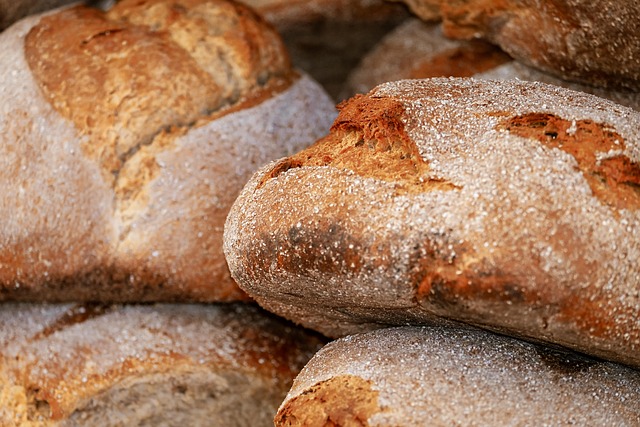
The aim of a recent study, carried out by a group of Italian researchers (Ficco et al., 2025), was to analyse the effects of barley and Triticale flour, added in different percentages to re-milled semolina (0, 2, 5, 7 and 10%), on the quality of bread.
The results show, at a technological level, greater water absorption and better stability of the dough, while the development time increases only in the presence of barley. An increase in the mixing time on the mixograph was also observed, but the peak height decreases. In the bread, there is a lower specific volume and a lower hardness, while the other quality parameters do not vary significantly, as, for example, in the case of the porosity of the crumb. The authors point out that the crumb appears darker than the control, but the crust is lighter. Following baking, beta-glucan levels increase differently in the various samples, being present even at low percentages of integration, demonstrating that heat treatment inactivates endogenous enzymes, reducing the degradation of these polysaccharides.
In conclusion, the authors argue that barley flour and tritello can be usefully employed for the development of bakery products that promote an increase in the daily intake of beta-glucans. However, further research is still needed to improve some of the product’s quality characteristics and to assess the impact on sensory properties. Translated with https://laratranslate.com
Bibliographic references: D.B.M. Ficco et al., Tecnica Molitoria, 76, 2025, 45-59