Leading the Filodilana project – which began about ten years ago and is based in Avigliana, on the outskirts of Turin – are Matteo Pellis, the brewer, Roberto Mazzi, who handles sales and marketing, and Giorgio Masera, who is in charge of logistics. With them, the brewery’s journey, which started with homebrewing and developed through the experience of the beer firm, has progressively consolidated into a production system that today combines flexibility, variety and rigour.
The catalogue is very extensive, with over 20 labels, plus some special ones intended only for kegs. The most commonly used malts are Pils, Maris Otter and Pale, as well as Red and Black for the Bitter, Strong Scotch Ale, Porter and Imperial Stout. The hops range from American-style Citra and Cascade to English East Kent Golding and the more traditional Saaz and Hallertau. For one-shot productions, the brewery gives a nod to the contemporary scene, with the Australian Galaxy or the new Krush. Mr. Malt manages the supply.
Where the space is tailored to beer
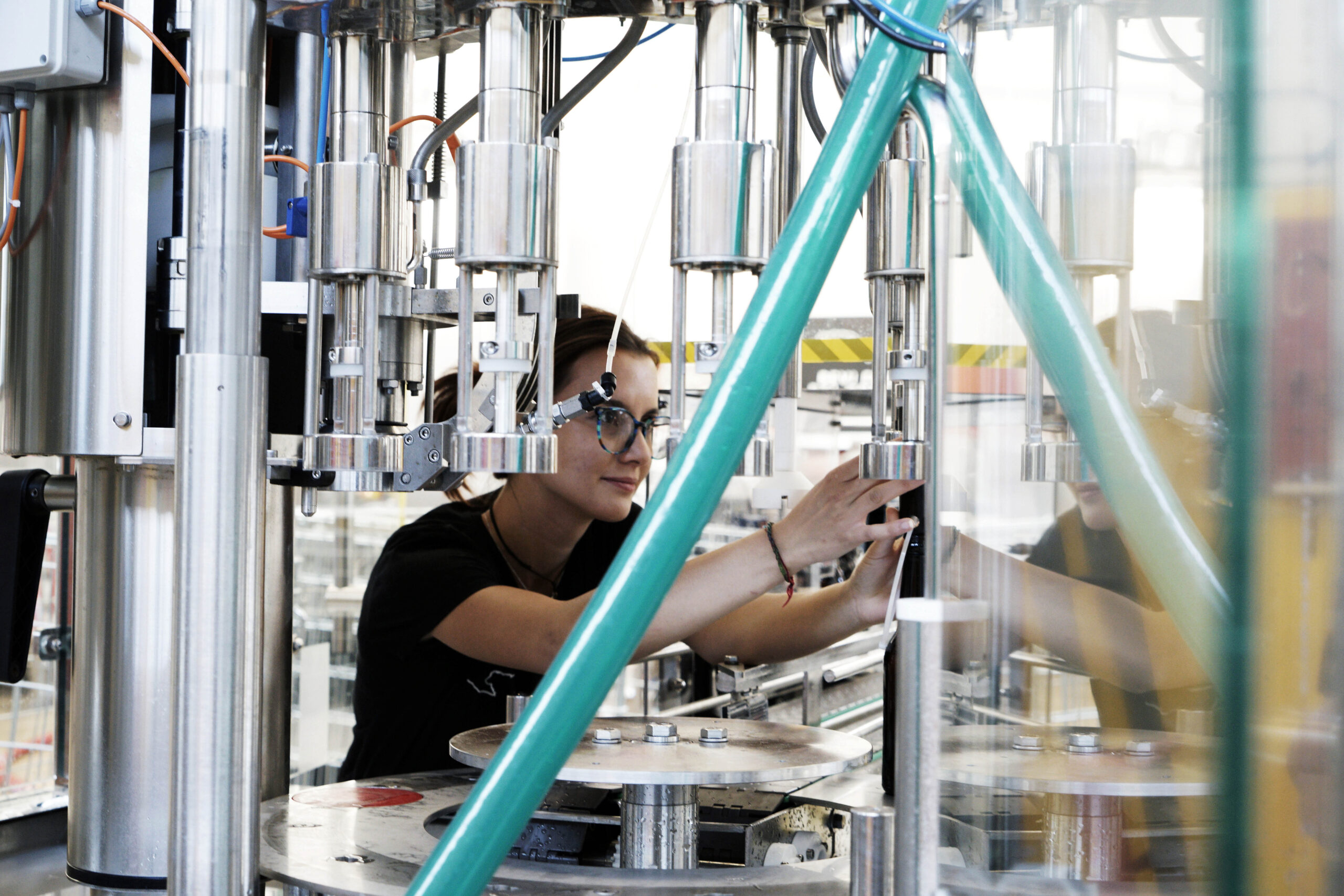
The current facility was created from the acquisition of an existing brewery, which was then reorganised and expanded to meet the needs of a more complex production process. This aspect had a direct impact on the configuration of the spaces: the brewhouse is located in the centre of the warehouse, while the fermentation and maturation cellar is in a separate area, creating a functional distinction between the stages of the process. However, as is often the case with conversions, the layout is not completely linear. Some flows, particularly those related to the handling of raw materials and finished product, pass through the production area, requiring careful management to avoid operational interference. Despite this, the plant is efficient and, above all, scalable. The latest major interventions have involved strengthening the cold chain and adding the bottling line. In particular, the expansion of the cold rooms was a crucial step in improving storage, while the packaging line made it possible to increase control over an increasingly strategic phase.
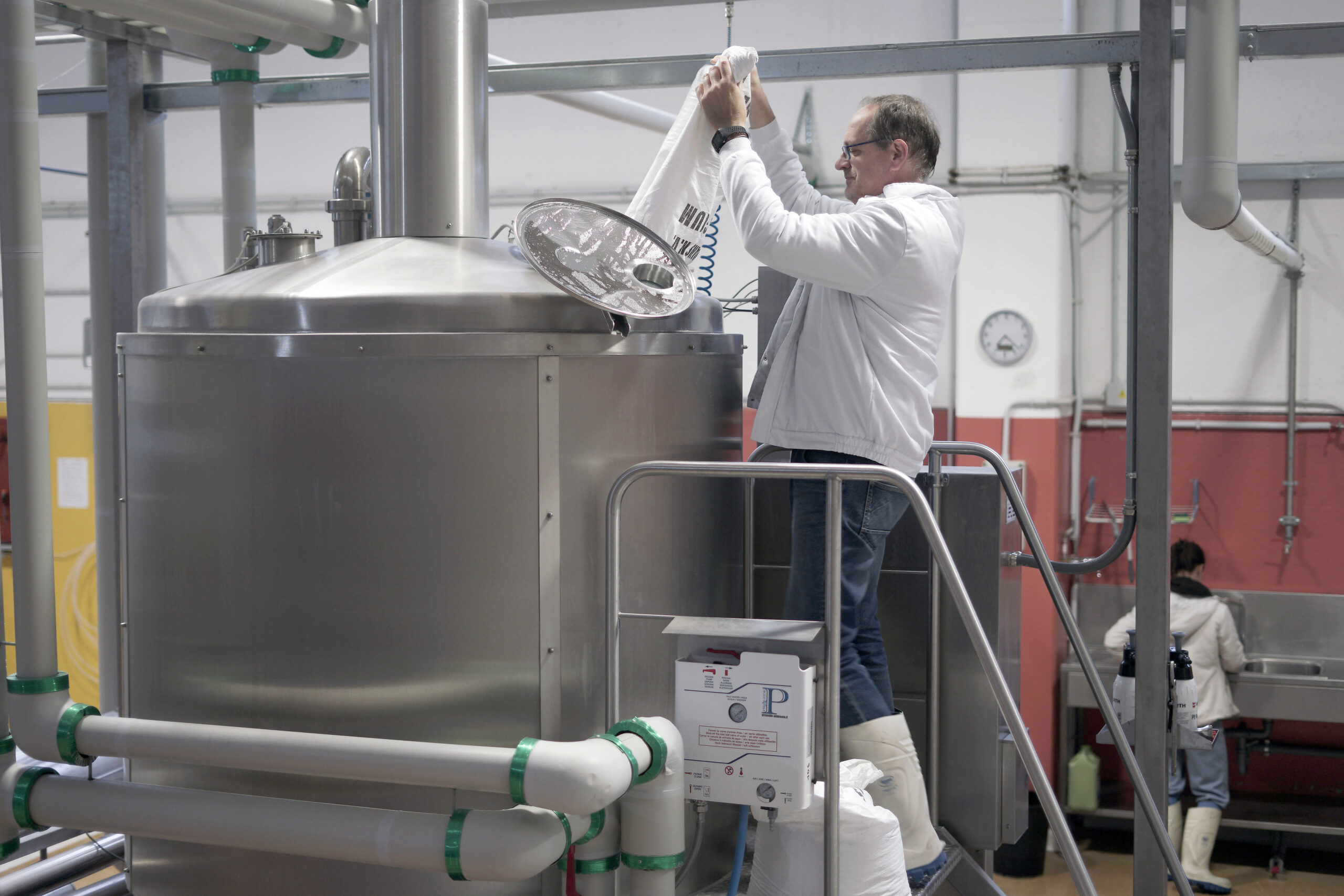
The vat room processes volumes of between 12 and 14.5 hectolitres per cycle, a scale that allows for good production flexibility, enabling the alternation of vats dedicated to standard products and those for more limited or experimental production.
Open-pan boiling of the must
At a time when many industrial plants are adopting closed boiling to optimise energy consumption and safety, one of Filodilana’s distinctive features is the open boiling of the must. In fact, the process helps eliminate unwanted volatile compounds, in particular dimethyl sulphide, which is responsible for olfactory defects attributable to vegetable or cooked corn notes. This approach requires greater operational attention, both in terms of temperature management and control of the working environment, but it allows for a cleaner product from an organoleptic point of view. An example of how, even in an advanced artisanal context, some traditional choices can be maintained when supported by adequate technical control.
Fermentation
The fermentation cellar is designed to ensure maximum flexibility. The presence of fermentation tanks of varying capacities, ranging from approximately 1,200 to 3,600 litres, allows the winery to manage both its own production and contract work simultaneously, as well as facilitating the development of new wines in small batches. From a technical perspective, most of the tanks operate at ambient pressure, with the option of applying slight overpressure for product protection purposes. This configuration is particularly well-suited to variety-based production, where it is not always necessary to operate under high-pressure conditions.
Alongside these are truncated-conical fermenters, which allow production to take place at higher pressures and enable more precise control of certain stages, such as carbonation or yeast separation. The coexistence of these two types of tanks represents an effective compromise between simplicity of plant design and process control. A key aspect is the pursuit of reproducibility. Despite the craft nature of production, the aim is to produce beers that are consistent from one batch to the next. This involves constant monitoring of fermentation parameters and systematic sensory evaluation of the product.
An integrated strategy for oxygen control
Oxidation is one of the main factors contributing to deterioration, particularly for hoppier beers, where the loss of aromatic freshness can be very rapid. Filodilana adopts an integrated strategy involving various stages of the process, with CO₂ being widely used as a protective gas throughout the entire supply chain, from transfer operations right through to packaging. A key role is played by secondary fermentation in the bottle, which, as well as producing natural carbonation, allows the yeast to consume the residual oxygen present in the liquid and in the headspace, significantly improving the product’s shelf life. This approach, whilst involving longer lead times and greater operational complexity, offers tangible benefits in terms of stability.