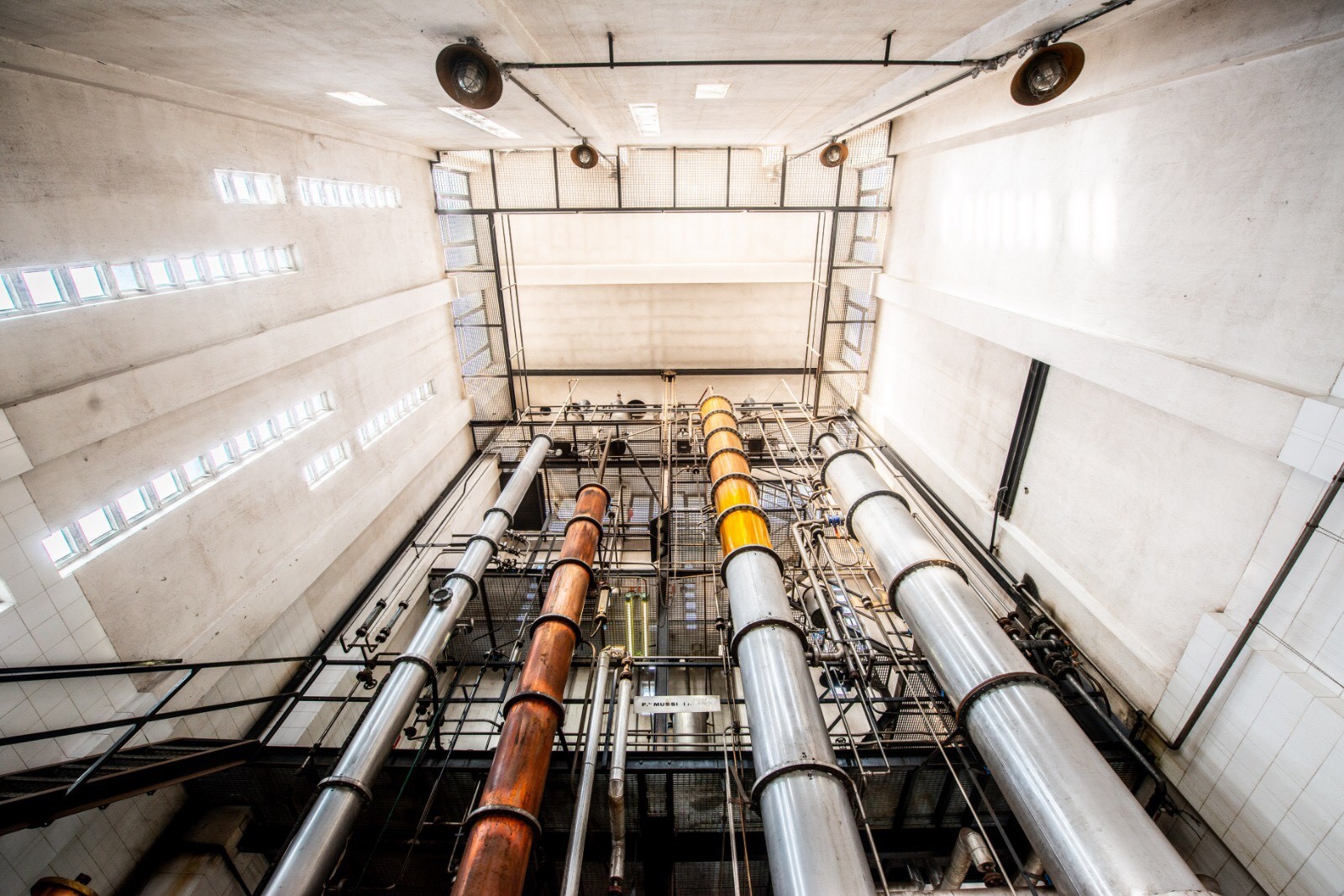
The art of distillation is in the Francoli family’s genetic code. Exactly 75 years after its foundation (in 1951), today Fratelli Francoli Distillerie is not only a company where about 40 people work, but also a model of sustainability for export. Although about 80% of the two million bottles sold each year are destined for the domestic market, the brand is present in several European countries such as Germany and the United Kingdom, the Baltic nations and Norway, and some of its ranges have made their way into Central and South America. It is in all respects a family business managed by cousins Alessandro, Alberto, Roberto and Andrea in their respective roles as President, Sales Director, Head of Logistics and Distribution in Italy, and Head of Certification and Safety. Enrico takes care of the parallel project – but one that is perfectly consistent with the company philosophy – of Francoli Energia, and at the offices in the centre of upper Piedmont, we were welcomed by Francesca, who oversees production and purchasing.
Third-generation and cogeneration
It was Luigi’s granddaughter – and therefore a representative of the third generation – who made it clear from the outset that ‘energy self-sufficiency and reducing environmental impact’ have always been the goals the distilleries have set themselves, pursuing them through various means. ‘Our raw material is, of course, grape marc, most of which we purchase from suppliers in the Asti and Alessandria areas, with the remainder sourced directly from growers in these regions. Once the grape marc has been fully utilised, it is used as fuel to power the distillation processes and to heat the premises via the boiler. A photovoltaic system has been in operation since 2006, installed on one of our warehouses and capable of supplying electricity; two years later, plans were launched to build a power station.” The latter was commissioned for the first time between 2012 and 2013 and ‘runs’ on pruning waste from vineyards or other crops, which is delivered to a dedicated collection centre and also includes the remains of urban green space maintenance work. Furthermore, since 2006, Francoli has been part of the ‘Impatto Zero’ initiative promoted by the radio station Lifegate, which is based on offsetting the CO₂ emitted in a year through tree-planting schemes in Costa Rica and the Ticino Park. The calculation of emissions covers the entire supply chain: from the product itself to the journeys made by sales representatives by car.
Between automation and the human factor
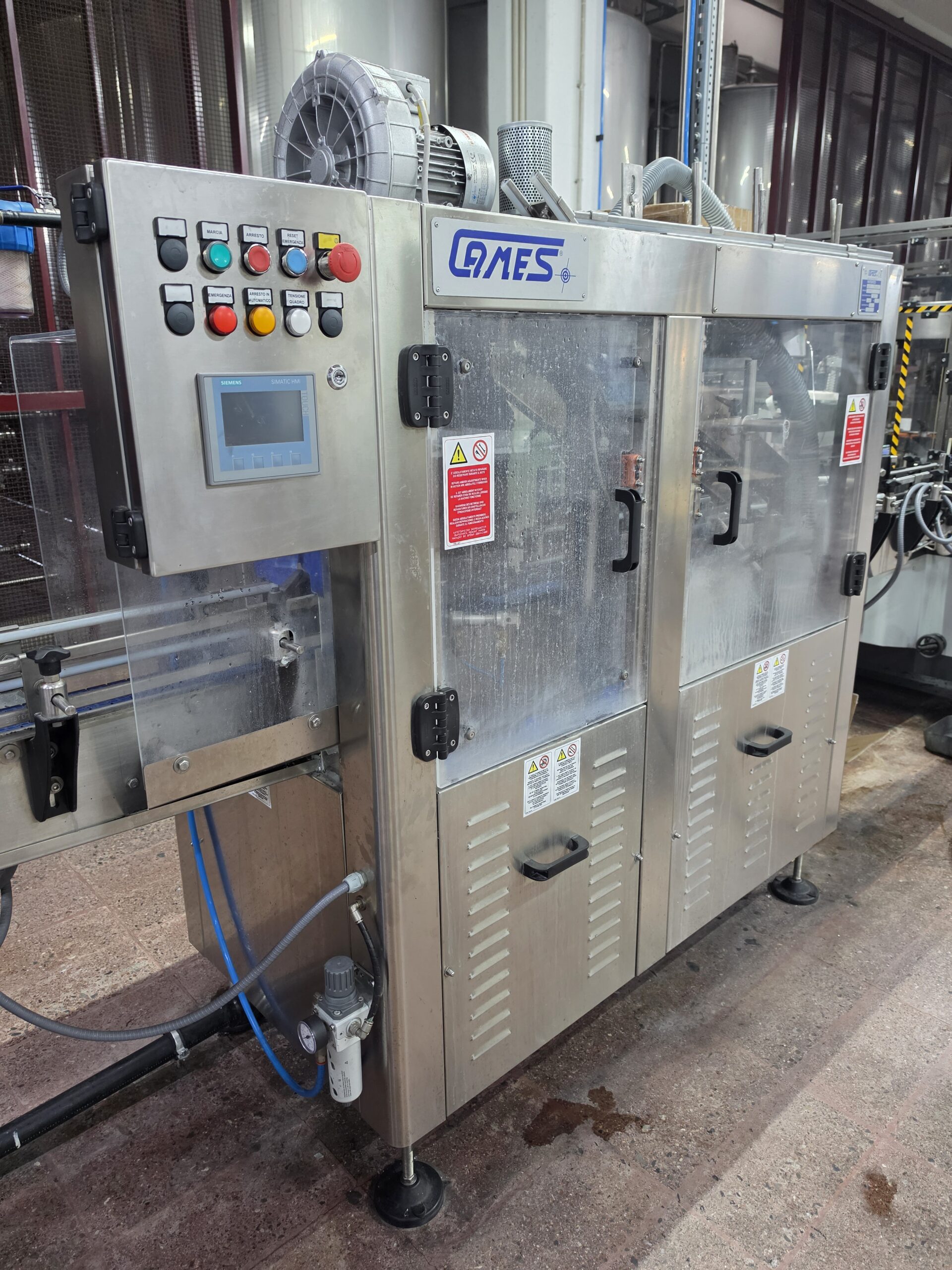
For bottling Francoli has four lines made up of machines supplied mainly by manufacturers based in the Asti and Alessandria areas. One is used for formats ranging from 500 milliliters to 1.5 liters, with a peak of 800 units per hour, and for particularly delicate, uniquely shaped glass containers and bottles with more refined and sophisticated designs, which must therefore be handled with the utmost care. It is almost completely straight, with no angles in the rollers to avoid any possible collisions. Loading and unloading are carried out manually to allow operators to check the quality of the frosting and other decorations. It is equipped with an Enopoggio rinser, a capper, and a capsule applicator; a pass through a Cames washer-dryer is only used when necessary to remove streaks from certain types of bottles. The setup is completed by a case former and a case packer, but here the dividers are inserted by hand so that the bottles can undergo a final inspection.
For smaller batches, the Mignon Ronchi line is used, installed almost at the same time as Distillerie Francoli’s debut on the market and still in more than satisfactory condition today. The main line is what the Ghemme plant refers to as Line 4. «With the exception of loading and unloading – explains Francesca Francoli – which is entrusted to an operator for greater reliability, it performs every task automatically. It is intended for more robust and standardized bottles, handled at a speed of 1,300–1,500 units per hour. It starts with a Fimer monoblock that rinses, fills, and caps, followed by a Cavagnino & Gatti labeling machine; it ends with a case former and a case packer, which will soon be replaced, a gluing machine, and a palletizing system».
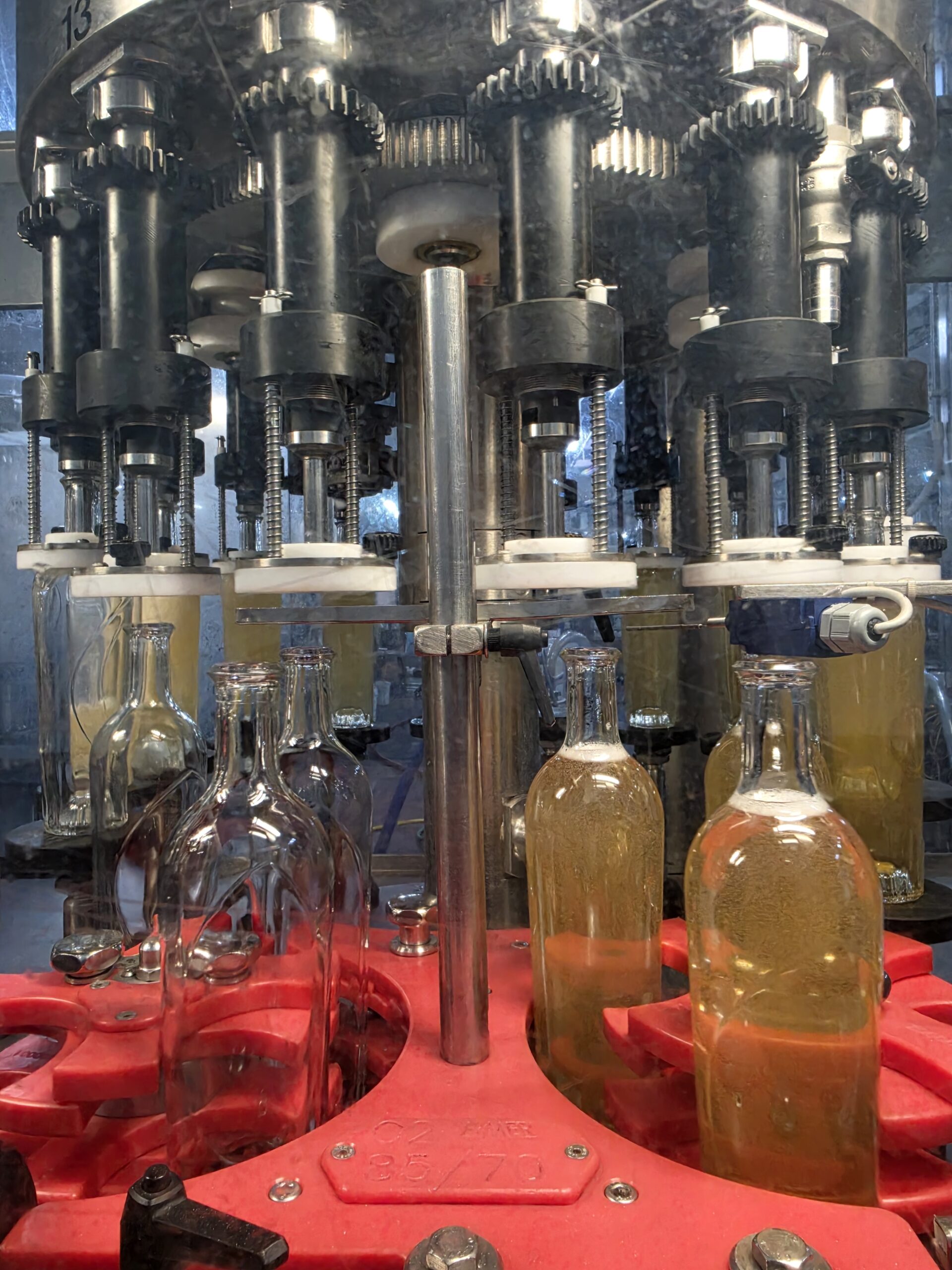
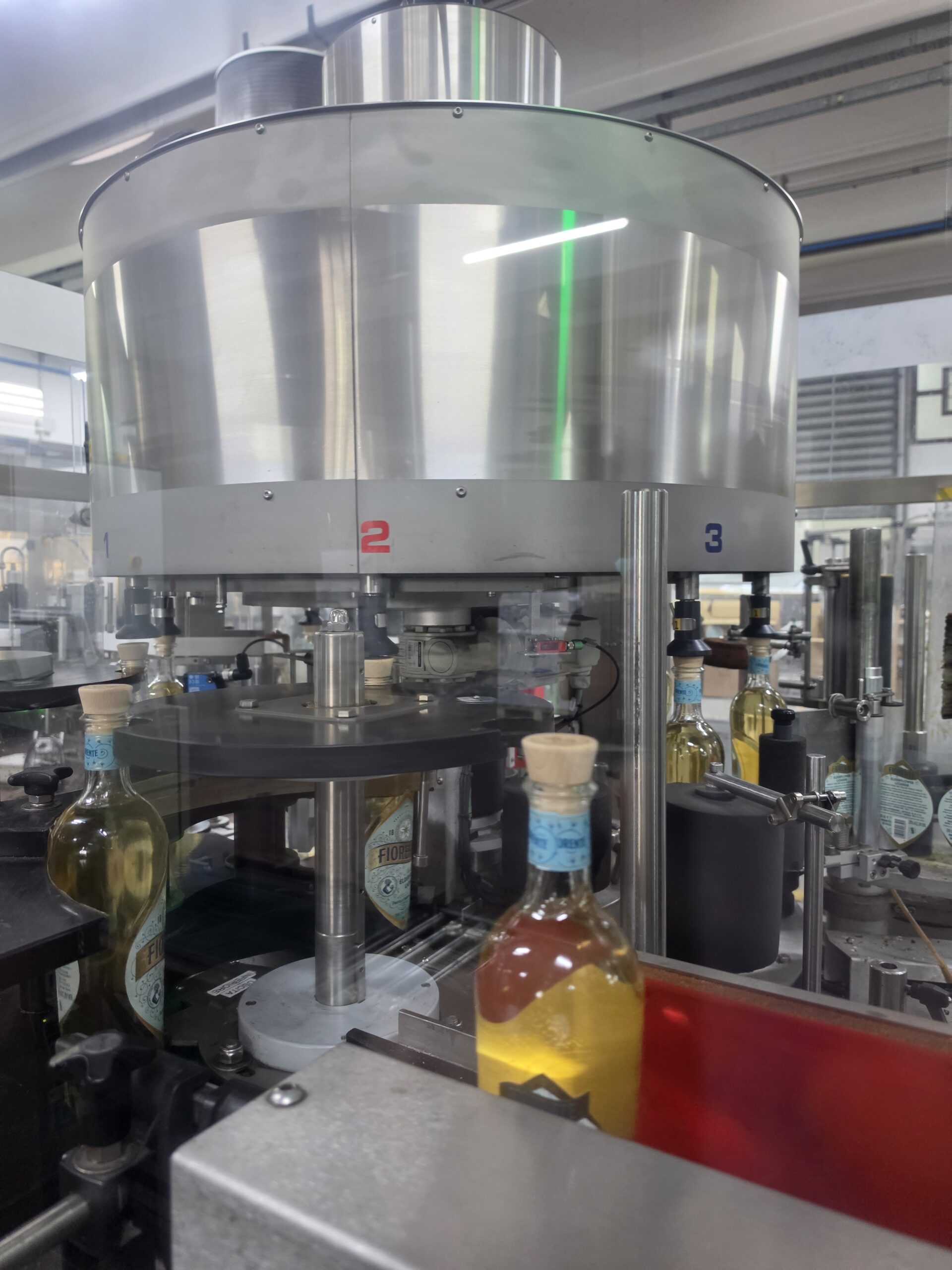
Combined with Line 3, the semi-line 3 works as an alternative to the previous one on two specific glass shapes, eliminating the lengthy downtime — up to one man-day — typical of line changeovers and cleaning. Its bottling capacity is 1,500 bottles of grappa or liqueurs per hour. «Every year we evaluate the possibility of replacing one machine or another with a more innovative solution. We are especially considering monoblock systems with integrated case packers, mainly for ergonomic and space management reasons».
Work pace and volumes must not be affected, since Distillerie Francoli also operates as a contractor for liqueur producers or companies usually active in other sectors, to whom it can provide consulting services on products, packaging, and compliance with international regulations.