In the craft beer market, the demand for disposable bottles continues to grow. In this scenario, it becomes increasingly important to understand how to make bottle production not only more environmentally efficient but also more cost-effective.
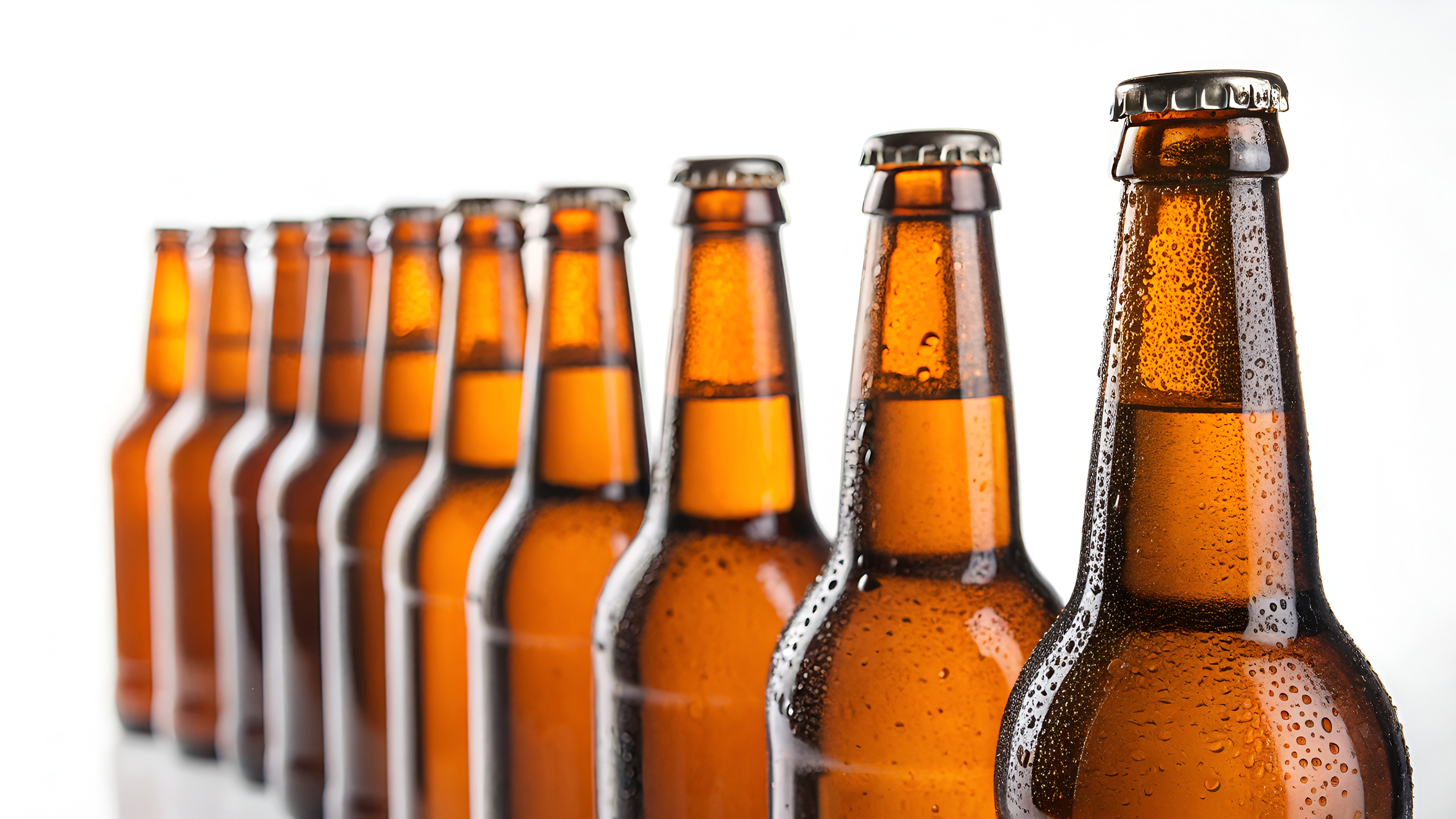
The study by Wojnarowska and colleagues analyzes in detail how the environmental impact of glass bottle production varies with the percentage of recycled glass (cullet) used and the transport distances involved. The work is based on a life cycle assessment (LCA) conducted according to ISO standards and the European PEFCR guidelines, thus offering a rigorous and comparable overview of the results. Three scenarios were modeled: S01 (0% cullet), S02 (57%), and S03 (90%), simulating recycled glass transport distances between 25 and 250 km.
The results show that increasing the recycled glass content leads to a significant reduction in environmental impacts across all categories considered, particularly for climate change, land use, cumulative energy demand, and ecological toxicity. In particular, scenario S03 (90% cullet) proved to be the most advantageous even at long transport distances, while S02 begins to lose environmental efficiency beyond 150 km.
One of the most innovative elements of the study is the integration of recycled content and transport logistics as interdependent variables, an element often overlooked in LCAs. The study identifies critical thresholds beyond which the environmental benefits of using recycled glass are offset by transport-related emissions. For example, in the worst-case scenario (S02), a distance beyond 4,500 km makes the option less sustainable than using only virgin glass. However, within the typical operating distances of the European supply chain, the use of cullets remains largely advantageous.
From an energy perspective, the use of recycled glass allows for significant savings: Scenario S03 reduces cumulative energy demand by 27% compared to Scenario S01. Although recycled glass requires more complex logistics, the energy balance remains favorable thanks to the lower heat requirement of the cullet during the melting phase.
The study also highlights how the production of non-reusable bottles presents specific challenges, especially in terms of design (ecodesign) and product management after consumption. The fact that craft beer bottles are not eligible for currently available deposit systems makes it even more important to rely on truly efficient collection and recycling, as well as rethinking packaging with a more environmentally friendly approach.
For the craft beer sector, the results suggest several practical avenues: choosing local suppliers for recycled glass, increasing the share of cullets in bottle production, and developing symbiotic collaborations with other industrial companies to reduce transportation distances.
Bibliographic references: Wojnarowska, M.; Muradin, M.; Paiano, A.; Ingrao, C. Recycled Glass Bottles for Craft-Beer Packaging: How to Make Them Sustainable? An Environmental Impact Assessment from the Combined Accounting of Cullet Content and Transport Distance. Resources 2025, 14, 2. https://www.mdpi.com/2079-9276/14/2/23