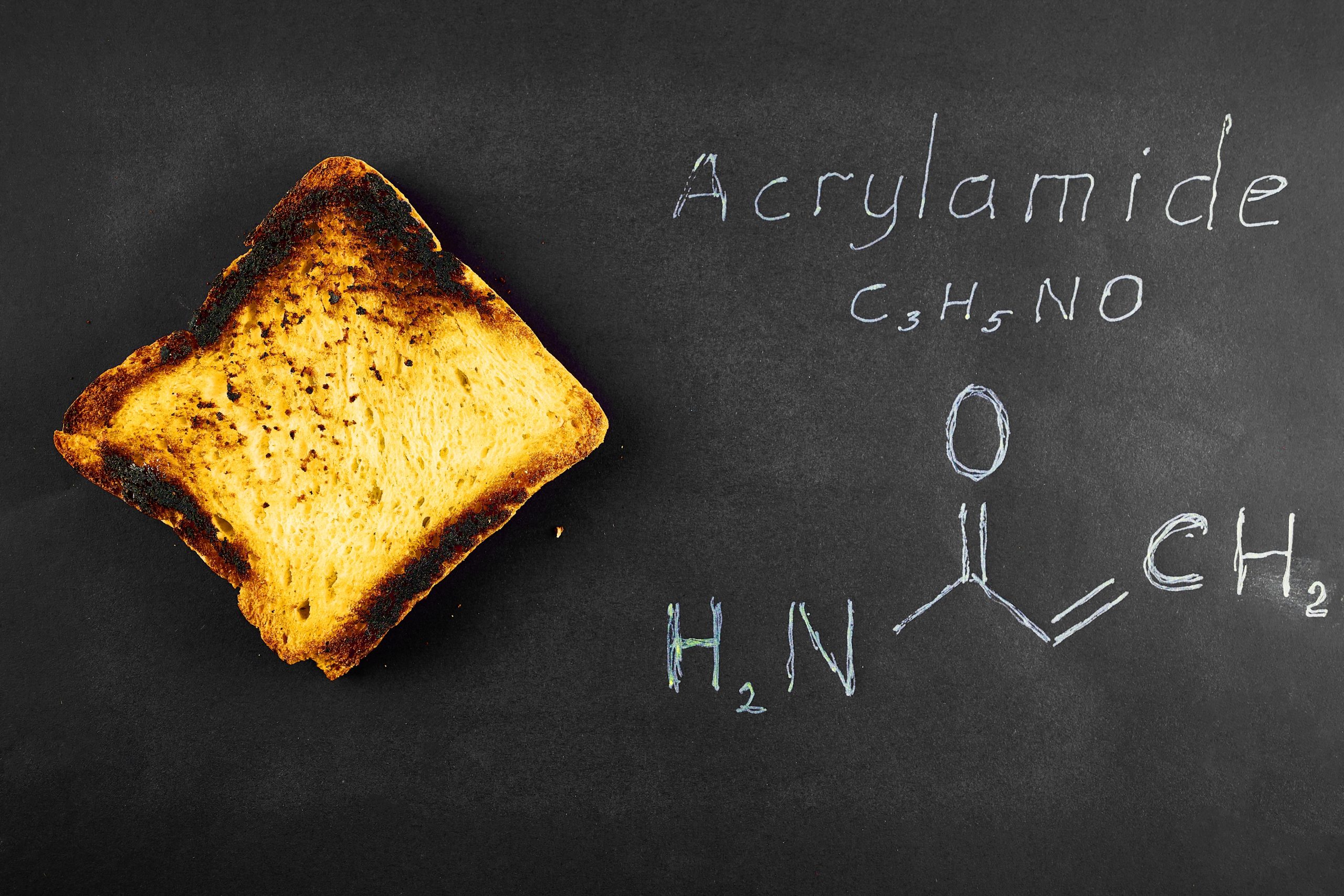
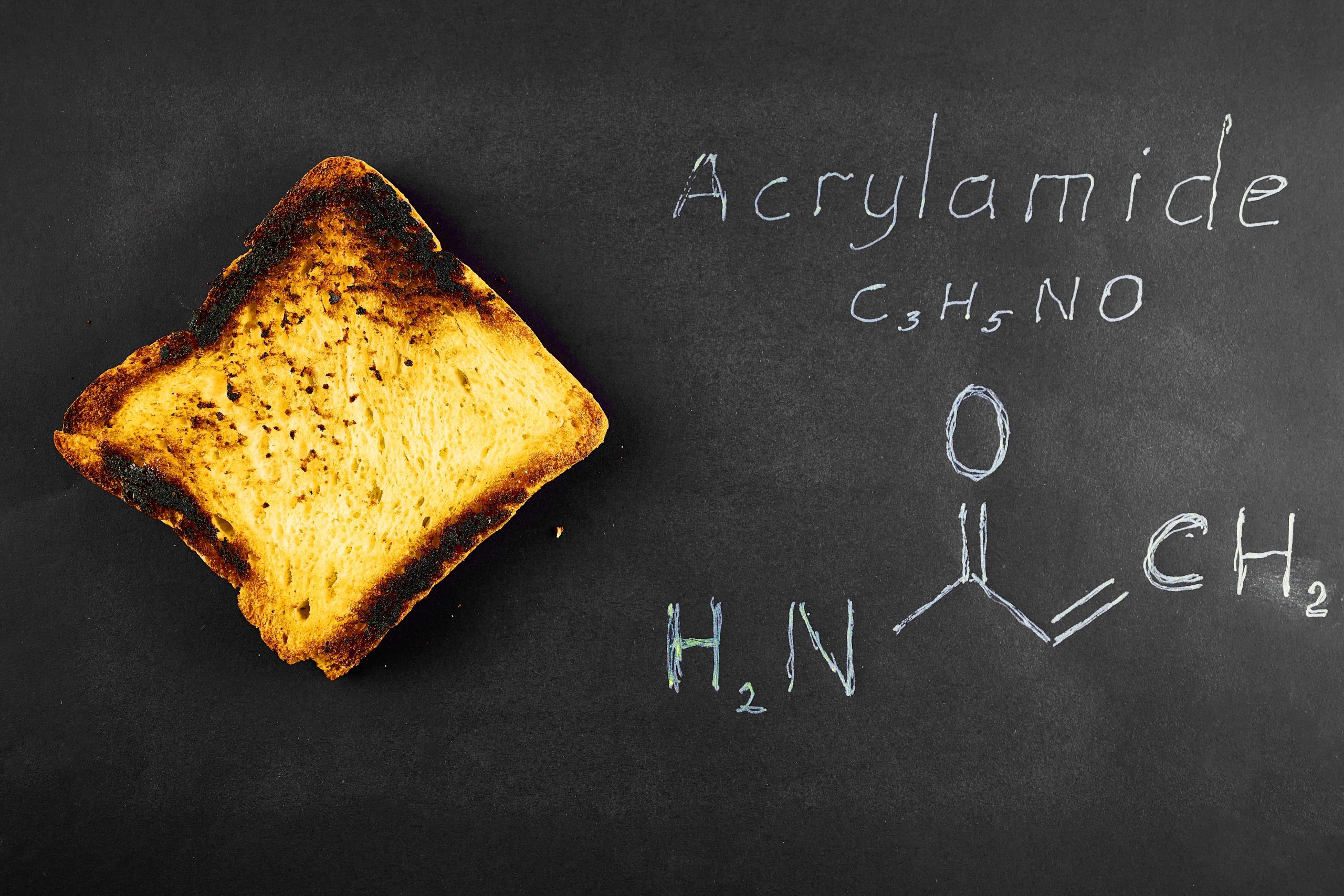
Acrylamide is a toxic substance formed during high-temperature cooking (>120°C) as a product of the Maillard reaction. Reducing its presence in baked goods represents one of the most complex challenges for this industry.
In this context, the aim of a recent study conducted by a group of Italian researchers (Calabrese et al., 2024) was to evaluate the effectiveness of the application of the enzyme asparaginase in mitigating acrylamide formation in bread. This enzyme catalyzes the hydrolytic cleavage of asparagine, a precursor to the toxin, into aspartic acid and ammonia, thus reducing its formation.
Specifically, samples were prepared with different dosages of asparaginase (150 and 300 U/kg of flour) and baked under standard conditions (260°C for 40 min). The results demonstrate that the enzymatic treatments are able to reduce the acrylamide content by 61% and 78%, respectively, in bread treated at 150 and 300 U/kg, without affecting quality parameters such as product color.
However, further studies are needed to fully evaluate the impact of this technology on the nutritional and organoleptic properties of the product, as well as to optimize the processing conditions to maximize the benefits of acrylamide reduction, without compromising the quality of the bread.
Riferimenti bibliografici: Calabrese et al. LWT. Food Science and Technology, 209, 2024, 116770.