In the Sicilian wine scene, where every hill holds thousands of years of stories about the land and wind, Casa Vinicola Fazio stands out as a cool mix of tradition and innovation. It’s not just a place where wine is made: it’s a place to check out the area, where every row of vines connects with the surrounding landscape and every harvest is a chance to show off what Erice is really about. In an agricultural context often dominated by market logic, the company chooses to measure success with one decisive parameter: the quality that comes from respect for the land and the patience of the hands that work it.
Founded in the 1960s in Fulgatore (TP), this winery has always maintained its exclusive roots in the Erice area, choosing to operate solely within this geographical perimeter in order to enhance its unique soil and climate characteristics. Today, the company has 70 hectares of vineyards and 10 hectares of olive groves, producing one and a half million bottles annually.
“Casa Vinicola Fazio was born from the commitment of a family that has been passionately dedicated to the art of viticulture and the production of excellent wines for four generations“, explains Lilly Fazio, CEO of the company. A family tradition that is both the cornerstone and driving force behind the business. In 2004, Casa Vinicola Fazio promoted the recognition of the Erice DOC: a strategic step to express the authentic soul of the territory, transforming historically marginal potential into distinctive qualitative resources. “Our strength lies precisely in our particular focus on promoting the Erice DOC“, confirms Fazio, reiterating how every choice – from the vineyard to the cellar – is guided by the desire to represent Sicily faithfully and authentically. The company employs around 20 people, including permanent and seasonal staff, all trained in-house and committed to working in the Erice area according to principles of sustainability, respect for the environment, ethical management of natural resources and meticulous care at every stage of the production process.
Enhancing craftsmanship sensitivity
The harvest, carried out strictly by hand and calibrated to seasonal cycles, represents the first gesture of respect for the territory, while in the cellar, careful control of fermentation and ageing allows the varietal characteristics and natural aromas of each grape variety to be preserved. The modern and technologically advanced production facility has a potential capacity of up to 3 million bottles, and the company’s range includes wines aged in tonneaux or barriques for up to 24 months – a practice reserved for selections intended to express complexity and finesse – and sparkling wines produced in-house using the Charmat method, confirming a capacity for technical diversification without compromising on territoriality. The technologies adopted in the winery do not replace artisanal sensitivity, but enhance it, allowing traditional winemaking methods to be combined with advanced control tools, from temperature management to soft pressing, to the latest generation of bottling systems. The company headquarters also includes a showroom and conference rooms, spaces designed to host tastings and events, where the public can come into direct contact with the wines and understand the Fazio family’s production philosophy.
Recent investments, which reached €1,400,000 in 2024, have enabled the installation of a photovoltaic system, the renovation of some machinery and the expansion of the vineyards, reflecting a green and forward-looking approach that combines efficiency, reduced environmental impact and production quality. Every stage, from grape harvesting to bottling, reflects meticulous attention to detail, in a model that considers technology to be an ally of tradition.
More consistent quality, fewer stoppages and less waste
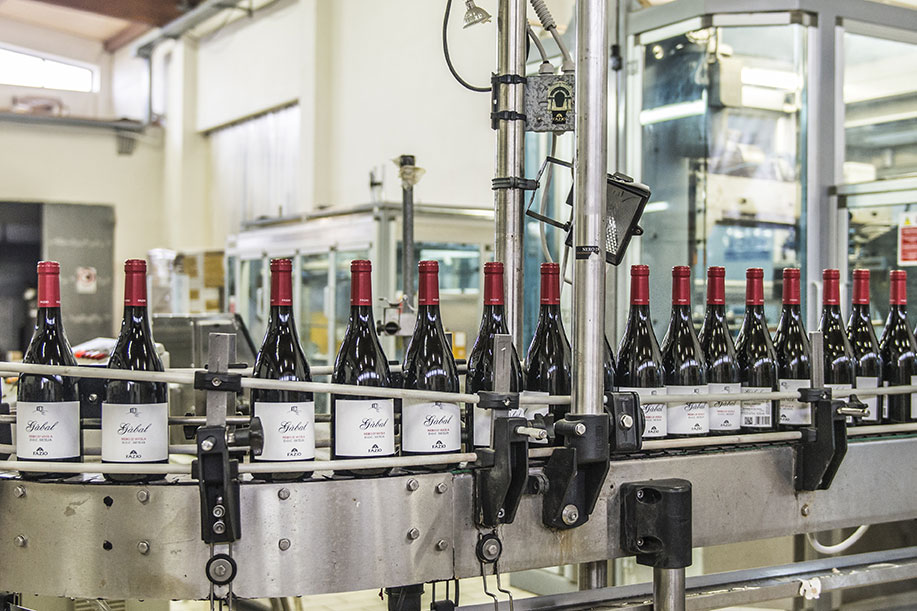
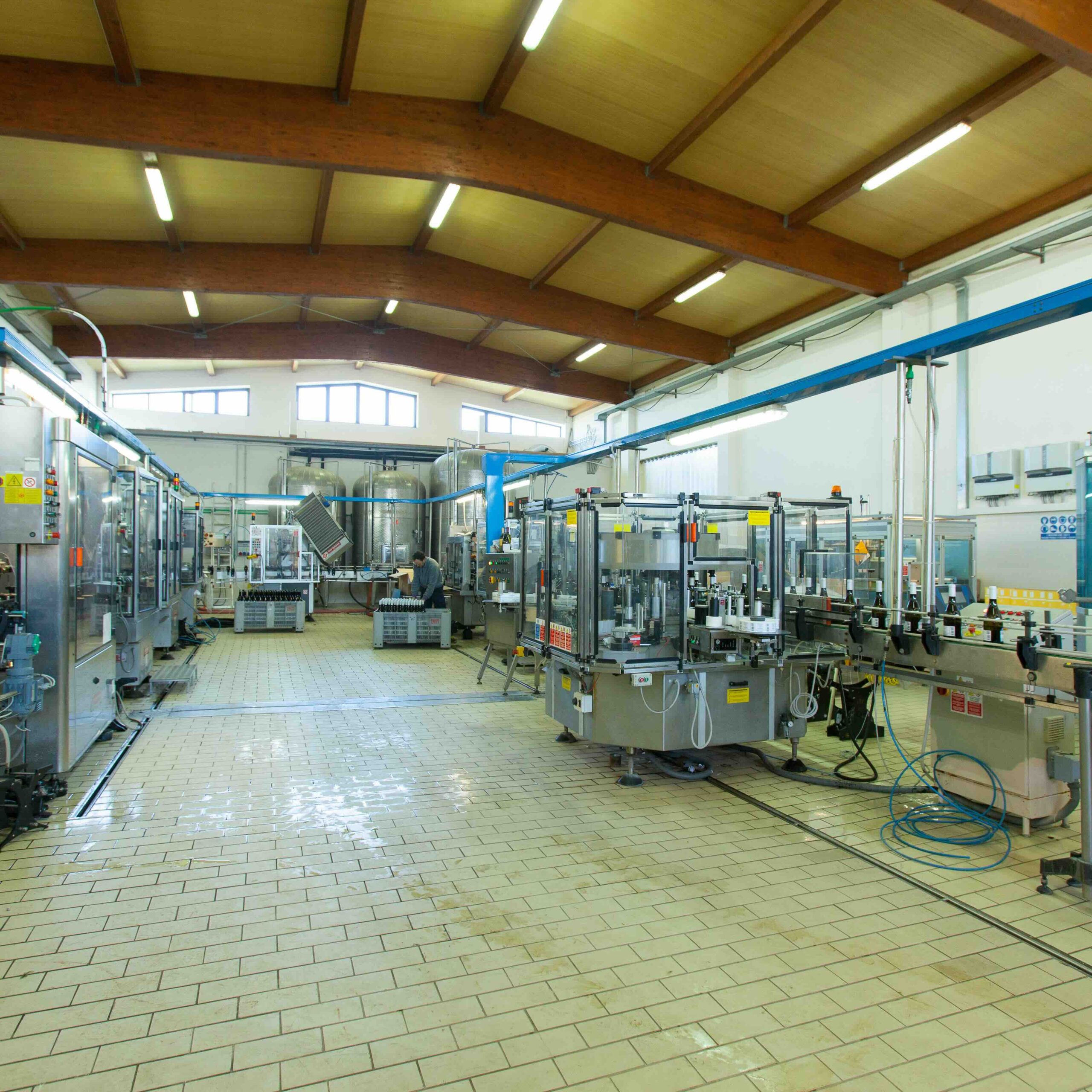
The bottling plant is located within a well-organised production area, designed to ensure continuous workflow and maximum efficiency at every stage. The entire bottle journey, from depalletising to palletising, is fully automated, with constant checks to ensure quality, hygiene and production consistency.
“Our line is isobaric and includes machinery from leading brands in the sector“, comments Lilly Fazio, highlighting the focus on choosing reliable, cutting-edge equipment. The line, created in 1999, was the starting point for an increasingly technological approach to bottling, which has been progressively renewed with the introduction of new machinery over time: in 2015, the MS Pack Minipal depalletiser and the Taro 12 palletiser automated the initial and final stages of the line, while in 2022, the new Cavagnino & Gatti labelling machine significantly increased precision and processing speed. All the machines, made of stainless steel and equipped with automatic CIP washing cycles, guarantee high quality standards, flexibility and constant hygiene. “We use technologies that guarantee precision, healthiness and versatility; the isobaric filler allows us to process both still and sparkling wines, while the cappers and capsulators can be configured for different types of closures“, says Fazio. “Our priority is to ensure consistent quality while minimising waste and downtime“.
3.000 bottles per hour and rapid format changes
The journey of the bottles – generally in 0.75, 1.5 or 0.375 litre formats – begins with automatic depalletising using MS Pack Minipal, which picks up the pallets from the storage area. The bottles then enter the Bertolaso 20-clamp rinser, where they are washed and sanitised before being dosed by the Bertolaso Suprema 24 isobaric filler (with 24 taps) in a controlled atmosphere. The bottles are sealed using the Bertolaso Delta 603 R/S 3-head capping machine for still or sparkling wine caps and the Stelvin Alfa 110 capping machine for screw caps. The bottles then pass through the Bertolaso Fenix 2 wirehooding, washing and drying machine and capsuling machine, before reaching the Cavagnino & Gatti labelling machine. The subsequent packaging stages, carried out by Mondo & Scaglione machinery, involve the formation, filling, gluing and closing of the cartons, with the Taro 12 palletiser completing the cycle by preparing the pallets for shipment. The line is capable of handling an average of 3,000 bottles per hour, with quick format changes in less than 30 minutes, and daily production can reach 20,000 bottles. “The machine that has given us the greatest satisfaction is the Bertolaso Suprema 24 filling machine, for its precision, reliability and ease of cleaning“, says Lilly Fazio, who also highlights the benefits of the new labelling machine, with its impeccable application quality and great flexibility in switching from one format to another.
True further technological enhancement
The winery is currently considering its next innovations. Automatic visual control systems are being developed to verify the correct application of labels and the presence of caps, as well as digital data collection tools to monitor line performance in real time. “The goal is to continue to improve the efficiency, traceability and overall quality of our facilities“, explains Fazio. The further implementation of the bottling system, focused on increasing the mechanisation of individual processes and improving overall functionality in terms of both time and quality of the final result, is central to Casa Vinicola Fazio: according to the owners, this phase, which represents the final step, is also the most delicate of the entire production process. It is after this stage that the wine meets the consumer, and every detail must be perfect. The adoption of advanced systems allows us to maintain unaltered quality, reducing the risk of contamination and ensuring that each bottle faithfully reflects the work carried out in the vineyard and in the cellar. “For us, investing in technology means investing in the safety, value and identity of the product. Every upgrade to the line is designed to increase productivity and flexibility, but also to protect the integrity of our wine, ensuring a final result that always meets high and sustainable standards“.